
The power of your Jaw
Dental Hygiene| Holistic Health
By Connie Bislev
The Power of Your Jaw
How Jaw Tension Can Affect Your Entire Body
Most people think the mouth and jaw are only important for chewing food or having a beautiful smile. But the truth is far more fascinating.
Your mouth and jaw are connected to far more than oral health. They influence breathing, posture, stress, sleep and overall wellbeing.
The body works as one connected system. What happens in the mouth does not stay in the mouth. Tension, imbalance, inflammation, breathing patterns and jaw position can create effects throughout the entire body — from the head and neck all the way down to the hips, knees and feet.
Understanding this connection is part of a more holistic approach to health.
The Jaw — One of the Most Powerful Muscles in the Body
The jaw muscle, especially the masseter muscle, is one of the strongest muscles in the human body relative to its size. It is designed to help us chew, speak, swallow and express emotions through facial movement.
But in modern life, the jaw often becomes overloaded.
Stress, anxiety, interrupted sleep, poor posture and tension can cause many people to unconsciously clench or grind their teeth — sometimes during the day, but very often during sleep.
For some people, this tension becomes so normal that they no longer notice it.
The problem is that chronic jaw tension rarely stays isolated in the jaw itself.
The Mouth-Body Connection
The mouth is not separated from the rest of the body. It is the gateway to the body and part of both the digestive and respiratory systems.
The way we breathe, chew, swallow, rest the tongue and position the jaw can influence many functions throughout the body.
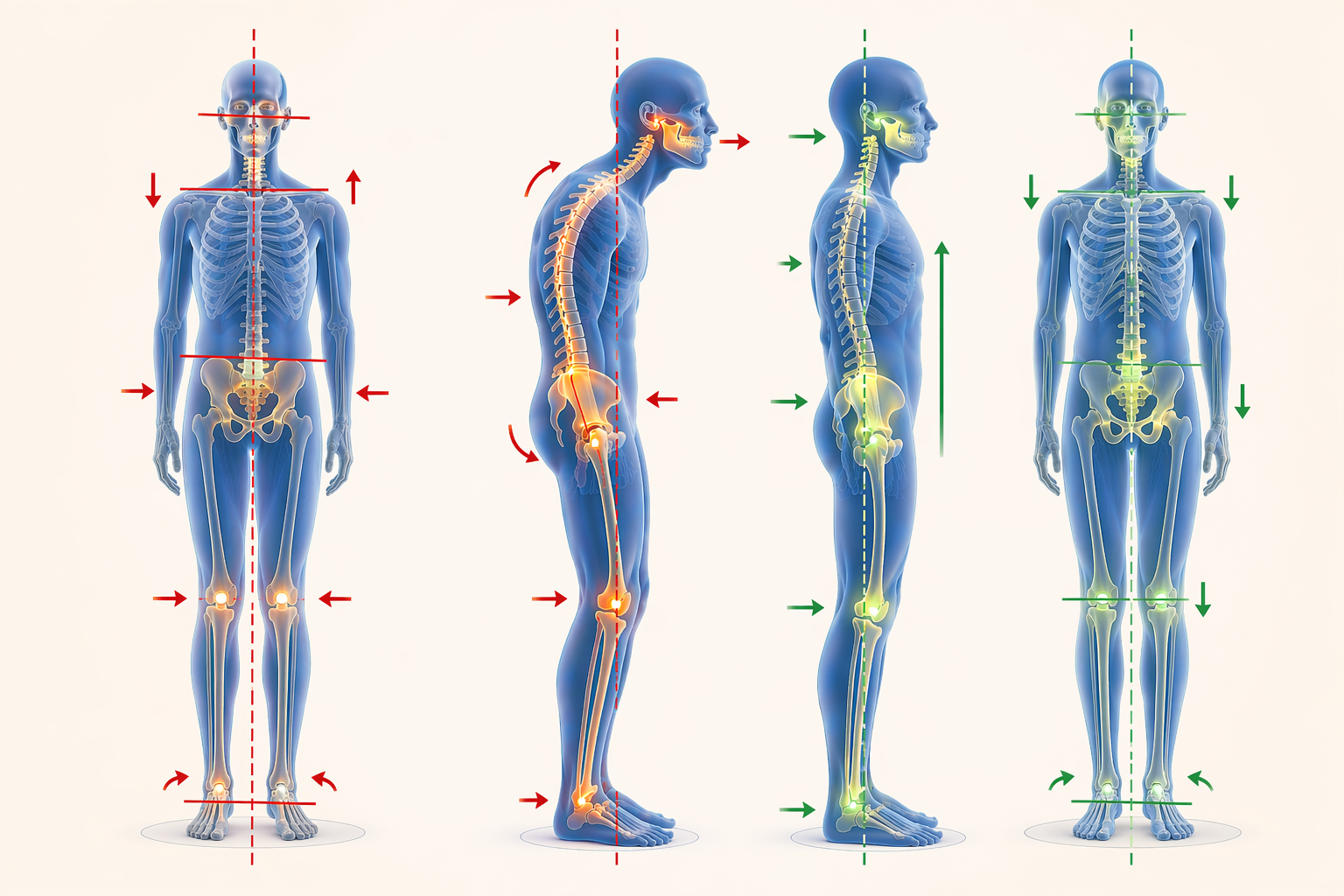
When the jaw changes position, the head often follows.
When the head moves forward, the neck muscles tighten.
When the neck tightens, the shoulders and spine begin to compensate.
Over time, this compensation can influence posture, movement patterns and muscular balance throughout the body.
The body constantly adapts in order to maintain balance.
Even small imbalances around the jaw may contribute to tension patterns that travel through the entire muscular and fascial system.
Jaw Tension and Body Posture
Poor posture and jaw tension often influence each other.
Forward head posture, rounded shoulders and long hours looking down at phones or computers can place extra strain on the jaw and neck muscles. At the same time, jaw tension itself may contribute to changes in posture and body alignment.
Many people who experience jaw tension also report:
Neck pain
Shoulder tension
Headaches
Facial pain
Tightness around the temples
Fatigue
Tension throughout the upper body
The jaw is closely connected to the neck through muscles, nerves and fascia. Because of this, tension around the jaw may affect the body’s natural balance and movement patterns.
Some studies also suggest that dental occlusion — the way the teeth come together — may influence posture and stability in certain individuals.
Crowded teeth, missing teeth, tooth wear and bite imbalance may therefore be more than simply cosmetic concerns.
Teeth Grinding (Bruxism)
Teeth grinding, also known as bruxism, is becoming increasingly common.
Many people grind or clench their teeth unconsciously during sleep and only discover it after developing symptoms such as:
Tight jaw muscles
Waking with facial tension
Disturbed sleep
Neck and shoulder pain
Headaches
Tooth wear or cracked teeth
Tinnitus or ringing in the ears
Fatigue and muscle soreness
One of the challenges with bruxism is that people are often unaware they are doing it.
The body may be reacting to emotional stress, breathing difficulties, interrupted sleep or nervous system overload without the person consciously noticing.
Stress, Breathing and the Nervous System
Stress plays a major role in jaw tension.
When the body enters a stress response — often called “fight or flight” mode — muscles throughout the body tighten, including the jaw muscles.
Breathing may become more shallow and rapid. The shoulders rise. The nervous system stays alert.
Over time, this constant state of tension may contribute to clenching habits, disturbed sleep and chronic muscular tightness.
The position of the tongue and the quality of breathing are also important.
A low resting tongue position may contribute to narrowing of the airway during sleep, potentially affecting breathing quality and increasing tension in the jaw and neck.
The body is always trying to protect itself and maintain airflow.
Sometimes teeth grinding may be part of that protective response.
Oral Health and Overall Health
Holistic oral health is not only about teeth. It is about understanding how oral health may influence overall wellbeing.
Research has found links between gum disease and several systemic health conditions, including:
Cardiovascular disease
Diabetes
Chronic inflammation
Rheumatoid arthritis
Adverse pregnancy outcomes
This does not mean the mouth is the sole cause of these conditions, but it reminds us that the body functions as an interconnected system.
Prevention, awareness and daily care remain essential.
A Holistic Approach to Jaw Health
A holistic approach does not focus only on symptoms. It looks at the whole person and the possible contributing factors behind tension and imbalance.
Supporting jaw health may include:
Stress management
Breathing awareness
Relaxation techniques
Correct tongue posture
Improving sleep quality
Jaw muscle relaxation
Gentle exercises and stretching
Massage and tension release
Postural awareness
Oral hygiene and preventive care
NADA Ear Acupuncture and other supportive therapies
The goal is not perfection.
The goal is to help the body move toward greater balance, relaxation and awareness.
Prevention Is Better Than Cure
Modern life places enormous stress on the body. Many people live with tension without realizing how deeply it affects their health and quality of life.
The good news is that small changes can make a difference.
Becoming aware of posture, breathing, stress levels and jaw tension is often the first step.
The mouth and jaw are not isolated structures. They are part of an intelligent and connected system that influences the entire body.
When we begin to understand the Mouth–Jaw–Body Connection, we can approach health in a more balanced, preventive and holistic way.
Curious about the connection between the jaw, stress and the body?
Learn more about holistic oral health, jaw tension and the Mouth–Body Connection at: